
 EN
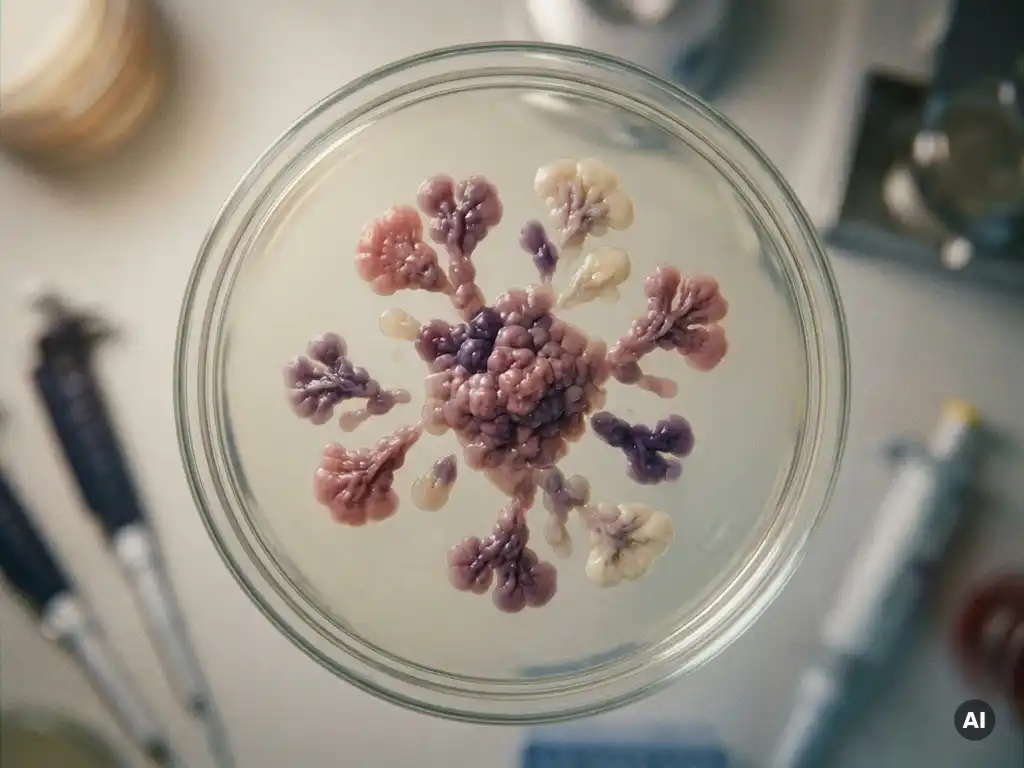
Clonal evolution is the process by which cancer cells accumulate somatic mutations over time, and those mutations that confer a survival or proliferation advantage are selected and expanded within the tumor. This process directly shapes tumor heterogeneity: as different cell lineages acquire distinct mutation profiles, a single tumor becomes a mosaic of genetically diverse subpopulations. The sections below unpack the key mechanisms, models, and research implications of clonal dynamics in cancer biology.
How does clonal evolution drive tumor progression?
Clonal evolution drives tumor progression by subjecting cancer cell populations to Darwinian selective pressure. A founder cell acquires an initiating mutation, and as its descendants divide, additional somatic mutations arise. Cells carrying mutations that accelerate growth, evade immune surveillance, or resist cell death outcompete their neighbors and expand into dominant clones, pushing the tumor toward greater malignancy.
This evolutionary dynamic is continuous rather than linear. A clone that dominates at one stage of tumor growth may later be outcompeted by a subclone carrying a new advantageous mutation. The result is a shifting hierarchy of cancer cell populations that changes across time and space within the same tumor. For researchers studying tumor biology, this means that a single biopsy captures only a snapshot of an ongoing evolutionary process, not a fixed genetic portrait.
The selective pressures driving clonal dynamics include nutrient availability, oxygen tension, immune cell activity, and exposure to therapeutic agents. Each of these environmental factors can alter which subclone holds a competitive advantage, making tumor progression deeply context-dependent.
What are the main models of clonal evolution in cancer?
The two main models of clonal evolution in cancer are the linear model and the branching model. The linear model proposes that mutations accumulate sequentially in a single cell lineage, with each new mutation building on the last. The branching model, now more widely supported by genomic research, describes multiple subclones arising simultaneously from a common ancestor and diverging along separate evolutionary paths.
Linear clonal evolution
In the linear model, tumor progression follows a stepwise path in which each successive mutation confers a stronger selective advantage. This model is conceptually straightforward and was historically influential, but it does not account for the genetic diversity observed within most solid tumors when sampled at multiple sites.
Branching clonal evolution
The branching model better reflects the complexity observed in intratumor heterogeneity. Here, subclones diverge from shared ancestral mutations and accumulate private mutations independently. This creates a phylogenetic tree-like structure of related but distinct cancer cell populations. Neutral evolution, in which some mutations spread without conferring a clear advantage, may also contribute to the diversity seen in certain tumors, adding another layer of complexity to interpreting clonal dynamics.
What causes intratumor heterogeneity to increase over time?
Intratumor heterogeneity increases over time because each cell division introduces the opportunity for new somatic mutations, and the longer a tumor exists, the more opportunity there is for subclones to diverge. Genomic instability, including chromosomal instability and defects in DNA repair mechanisms, accelerates this process by raising the overall mutation rate within the tumor.
Spatial factors also play a significant role. Cancer cell populations in different regions of a tumor are exposed to different microenvironments, including varying levels of hypoxia, immune infiltration, and nutrient gradients. These local conditions apply distinct selective pressures, encouraging regionally distinct subclones to emerge. As a result, two samples taken from different areas of the same tumor can show substantially different mutation profiles.
Epigenetic variation, changes in gene expression that do not alter the DNA sequence itself, adds a further dimension to heterogeneity. Subclones may differ not only in their somatic mutation landscape but also in how those genes are regulated, influencing cell behavior independently of sequence-level changes.
How does tumor heterogeneity affect treatment resistance?
Tumor heterogeneity is one of the primary drivers of treatment resistance in cancer research models. When a tumor contains genetically diverse subclones, there is a high probability that at least one subpopulation carries mutations that confer resistance to a given therapeutic agent. Selective pressure from treatment eliminates sensitive clones while allowing resistant subclones to expand and repopulate the tumor.
This phenomenon is well documented in laboratory and translational research settings. Researchers have observed that post-treatment tumor samples frequently show a shift in clonal composition compared to pre-treatment samples, with previously minor resistant subclones becoming dominant after exposure to selective pressure. This is sometimes described as clonal selection under therapy.
Understanding this dynamic has important implications for how researchers design experimental models of drug resistance. Studying clonal evolution before and after simulated therapeutic exposure, using multi-region sampling or longitudinal tracking, can help reveal which subpopulations are likely to survive and what molecular features they carry. This kind of research may contribute to developing strategies that target multiple subclones simultaneously or that anticipate evolutionary escape routes.
What methods are used to study clonal evolution in tumors?
Researchers use a range of genomic, imaging, and computational methods to study clonal evolution in tumors. The most widely applied approaches include:
- Bulk whole-genome or whole-exome sequencing to identify somatic mutations across the tumor and infer clonal architecture from variant allele frequencies
- Single-cell sequencing, which resolves mutation profiles at the level of individual cells and provides a direct view of subclonal diversity without averaging across populations
- Multi-region sampling, where multiple biopsies are taken from spatially distinct areas of a tumor to map the geographic distribution of subclones
- Liquid biopsy approaches, including circulating tumor DNA analysis, which allows researchers to monitor clonal dynamics longitudinally without repeated tissue sampling
- Phylogenetic reconstruction, a computational approach that uses mutation data to build evolutionary trees showing how subclones are related and when they diverged
- High-content imaging and live-cell imaging, which can track proliferation and phenotypic changes in cancer cell populations over time in laboratory models
Each method captures a different dimension of clonal evolution. Combining genomic data with imaging-based readouts and longitudinal sampling gives researchers the most complete picture of how cancer cell populations change under selective pressure.
How can understanding clonal evolution improve cancer treatment strategies?
Understanding clonal evolution may help researchers design treatment strategies that account for tumor heterogeneity rather than ignoring it. By mapping the subclonal architecture of a tumor before and during experimental treatment exposure, researchers can identify which mutations are present across all subclones (trunk mutations) and which are restricted to specific branches. Targeting trunk mutations, shared by all cancer cell populations, is a research strategy being explored as a way to reduce the likelihood of evolutionary escape.
Clonal dynamics research also informs the development of combination approaches in experimental oncology. If researchers can predict which resistant subclones are likely to emerge under a given selective pressure, they can model treatment sequences or combinations designed to suppress those subpopulations before they expand. This kind of evolutionary forecasting is an active area of investigation in cancer biology.
Longitudinal monitoring of clonal evolution using liquid biopsy or repeated sampling is being explored as a way to detect early signs of clonal shifts in research models, providing a window into how tumors adapt over time. For research organizations in the Benelux working on tumor biology, drug resistance mechanisms, or precision oncology models, these insights into clonal dynamics are shaping the design of more sophisticated experimental frameworks.
How BioSPX supports research into clonal evolution and tumor heterogeneity
Studying clonal evolution and intratumor heterogeneity requires instruments that can capture cellular diversity with precision and reproducibility. BioSPX supports research laboratories across the Benelux with a curated portfolio of life science instruments suited to this kind of complex, multi-dimensional research. Relevant capabilities include:
- High-content imaging and microscopy systems for tracking phenotypic changes in cancer cell populations over time
- Multimode readers and microplate-based assay platforms for high-throughput characterization of subclone behavior
- Liquid handling solutions that support reproducible experimental workflows across large sample sets
- Automation systems that reduce variability in cell culture and sample preparation, supporting longitudinal study designs
BioSPX’s product specialists advise on instrument selection and experimental setup, and the service team ensures correct installation and rapid maintenance response. If you are designing a research program around clonal dynamics or tumor heterogeneity, contact BioSPX to discuss which instruments best fit your workflow.
Frequently Asked Questions
What is the difference between clonal evolution and cancer stem cell theory?
Clonal evolution and the cancer stem cell (CSC) theory are two complementary but distinct frameworks for understanding tumor heterogeneity. Clonal evolution emphasizes Darwinian selection among genetically diverse subpopulations, while the CSC model proposes that a hierarchical subset of cells with stem-like properties drives tumor growth and regeneration. In practice, both mechanisms can operate simultaneously within a tumor: CSCs may serve as the founding populations upon which clonal evolution acts, and understanding how these frameworks interact is an active area of research in cancer biology.
How do I choose the right experimental model to study clonal dynamics in the lab?
The choice of model depends on the specific aspect of clonal evolution you want to investigate. 2D cell line cultures are useful for controlled, high-throughput studies of mutation acquisition and drug selection, but they lack the spatial complexity of real tumors. 3D organoid models and patient-derived xenografts (PDXs) better recapitulate intratumor heterogeneity and microenvironmental pressures, making them more suitable for studying branching evolution and treatment resistance. For longitudinal tracking of clonal dynamics, combining live-cell imaging with barcoding strategies or single-cell sequencing at defined time points can provide a detailed picture of how subpopulations shift over time.
Can neutral evolution be mistaken for positive selection in clonal analysis, and how can researchers avoid this?
Yes, this is a recognized challenge in the field. When a mutation spreads through a tumor population without conferring a clear fitness advantage — a process known as neutral or genetic drift — it can superficially resemble positive selection in variant allele frequency data. Researchers can reduce this risk by applying statistical models specifically designed to distinguish selection from neutrality, such as dN/dS ratio analyses or population genetics frameworks adapted for tumor data. Using multi-region sampling alongside computational phylogenetic tools adds further resolution, helping to separate true driver events from passenger mutations that hitchhiked to high frequency.
What are the most common mistakes researchers make when designing clonal evolution studies?
One of the most common mistakes is relying on a single biopsy or a single time point, which provides only a static snapshot of what is an inherently dynamic process and can lead to underestimating subclonal diversity. Another frequent pitfall is failing to account for sampling depth in sequencing experiments, as low-coverage data may miss rare subclones that could later become clinically or experimentally relevant. Finally, researchers sometimes overlook the contribution of epigenetic heterogeneity, focusing exclusively on somatic mutations while ignoring gene expression variation that can drive distinct subclone behaviors independently of sequence-level differences.
How does the tumor microenvironment influence which clones are selected during evolution?
The tumor microenvironment (TME) acts as a dynamic selective landscape that can strongly favor certain subclones over others. Factors such as hypoxia, nutrient gradients, immune cell infiltration, and stromal signaling all create localized selective pressures that differ across tumor regions, which is one reason why spatially distinct subclones emerge in solid tumors. For example, subclones with upregulated hypoxia-inducible pathways may gain a competitive advantage in poorly vascularized tumor cores, while those with immune evasion mechanisms may be preferentially selected in areas of high immune infiltration. Incorporating TME readouts — such as cytokine profiling, immune cell co-culture systems, or spatially resolved transcriptomics — into clonal evolution studies can therefore significantly improve the biological relevance of experimental findings.
Is it possible to predict which resistant subclones will emerge before treatment is applied?
Predicting resistant subclone emergence before treatment is an active and promising area of evolutionary oncology research, though it remains technically challenging. Pre-treatment deep sequencing can identify low-frequency subclones already carrying known resistance-associated mutations, providing an early warning of likely evolutionary trajectories. Computational modeling approaches, including evolutionary game theory and agent-based simulations, are being used to forecast clonal competition dynamics under defined selective pressures. While these methods are not yet predictive at a clinical level, they are increasingly valuable in experimental oncology for designing drug exposure studies that anticipate and probe specific escape routes.
How does liquid biopsy compare to multi-region tissue sampling for tracking clonal evolution in research models?
Both approaches offer distinct and complementary advantages. Multi-region tissue sampling provides spatially resolved information about how subclones are distributed across different tumor areas, making it well suited for mapping the geographic architecture of intratumor heterogeneity at a single time point. Liquid biopsy, through circulating tumor DNA (ctDNA) analysis, enables longitudinal monitoring of clonal dynamics over time without repeated tissue collection, which is particularly valuable for tracking how subclonal composition shifts in response to experimental treatment. In practice, combining both strategies — using multi-region sampling to establish a baseline clonal map and liquid biopsy to monitor temporal changes — gives researchers the most comprehensive view of clonal evolution in experimental cancer models.
Related Articles
- Why does fluorescence lifetime provide information beyond fluorescence intensity?
- How can flow cytometry complement live-cell imaging in treatment response studies?
- What is synthetic lethality and how is it used in oncology research?
- What is the difference between apoptosis and necrosis in cancer cells?
- What is the difference between primary and secondary cancer?
This content was generated with the help of AI and it may contain mistakes